
Why waiting another month means losing money you could earn today
You have skills people would pay for. You know this because people ask you for help, compliment your work, or tell you they wish they could do what you do. But somehow, those compliments never turn into income. You keep creating, learning, and improving while watching others with similar skills make money from work that doesn’t seem better than yours.
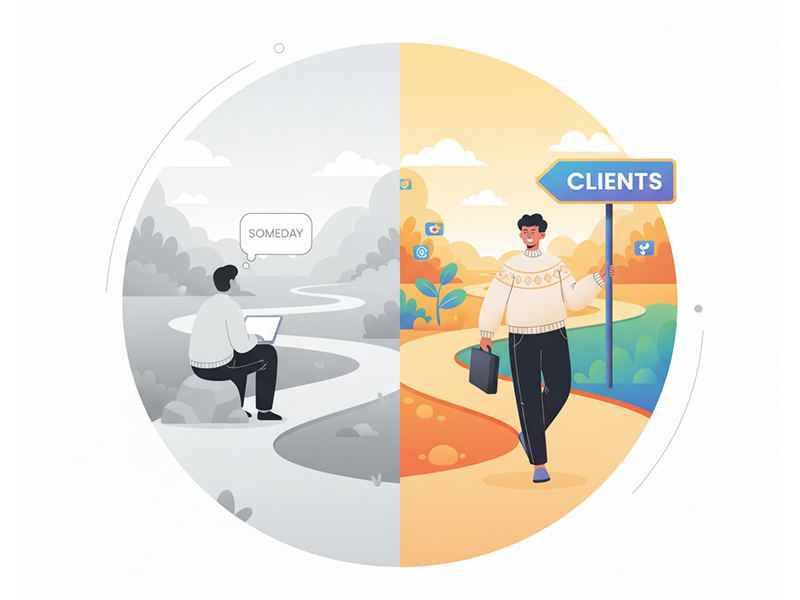
The problem is not your skills. It’s that you’re treating “turning skills into income” like a distant goal requiring months of preparation instead of a process you can start this week. Every day you wait to monetize your skills is a day someone else earns money doing exactly what you could be doing.
This guide gives you five concrete steps to turn your skills into income within 30 days. Not someday. Not when you’re more qualified. Not after you build the perfect platform. This month. These steps work whether you’re a designer, writer, coach, developer, marketer, or have any other valuable skill that solves problems for people.

Table of contents
- Why most people never monetize their skills (and how to be different)
- Step one: Identify your most monetizable skill right now
- Step two: Find where your ideal clients already are
- Step three: Create one clear offer they can say yes to
- Step four: Make it absurdly easy to pay you
- Step five: Ask for the sale (and keep asking)
- What to do after your first sale
- Common obstacles and how to overcome them
- Final thoughts: From skilled to paid in 30 days
Why most people never monetize their skills (and how to be different)
Talented people stay broke while less skilled people make money. This happens every day, and it’s not because the world is unfair or because marketing matters more than quality. It happens because skilled people wait for permission while less skilled people just start selling.
Here’s the typical pattern: You develop a skill. You practice it for free. You get better. People compliment you. You think “maybe I could charge for this someday.” You research how to start a business. You get overwhelmed. You decide to wait until you’re “really ready.” Meanwhile, someone half as skilled as you starts charging money, gets clients, and builds the business you’ve been planning.
The difference is not talent. It’s action. Specifically, it’s taking the five steps that move you from skilled person to paid person. These steps are simple, but most people never take them because they’re waiting for some external validation that it’s okay to start.
Here’s the truth: If you can do something that solves a problem for someone, you’re qualified to charge for it. You don’t need more credentials, more portfolio pieces, or more preparation. You need to identify what you’re selling, find people who need it, make an offer, and ask for payment.
That’s what these five steps do. They take you from “I have a skill” to “I earned money using that skill” within one month.
Step one: Identify your most monetizable skill right now
You probably have multiple skills. Maybe you’re good at writing, editing, social media, graphic design, and project management. The mistake most people make is trying to monetize all of them at once or choosing the skill they’re most passionate about instead of the skill people will pay for most quickly.
Your most monetizable skill is the one that meets three criteria:
Criteria 1: People are already paying for it
Don’t invent a new service category. Choose a skill where there’s proven demand. If thousands of people are hiring freelancers, coaches, or consultants for this skill, you know there’s a market. If no one is paying for it yet, that’s not a monetization opportunity for your first month. That’s a business experiment for later.
Criteria 2: You’re good enough to deliver results
You don’t need to be the world’s best. You don’t even need to be the best in your city. You need to be good enough that someone paying you will get clear value for their money. If you can do the skill well enough that a client would be happy they hired you, you’re ready.
Criteria 3: You can start immediately without major investment
Some skills require expensive equipment, certifications, or infrastructure. Those are fine for long term business building, but for your first month of monetization, choose a skill where you can deliver value with what you already have. A writer needs a computer and internet. A coach needs video call software. A designer needs design tools they already use.
The quick assessment:
List every skill you have. For each one, ask:
- Are people on Upwork, Fiverr, or Contra doing this work for money right now?
- Can I deliver results that would make a client happy?
- Can I start this week without buying equipment or getting certified?
The skill with three “yes” answers is your monetization starting point.
Examples of monetizable skills:
Writing: Blog posts, email newsletters, website copy, social media captions, case studies
Design: Logos, social media graphics, presentation decks, web design, brand identity
Coaching: Business coaching, career coaching, health coaching, productivity coaching
Technical: Website development, app development, no code automation, data analysis
Marketing: Social media management, SEO consulting, ad management, content strategy
Administrative: Project management, virtual assistance, calendar management, customer service
Don’t overcomplicate this. Pick the skill where you can most quickly deliver value to someone willing to pay. You can monetize other skills later.

Step two: Find where your ideal clients already are
You don’t need to build an audience from scratch to make your first income. You need to go where people who need your skill already hang out and are actively looking for help.
This is one of the biggest mistakes skilled people make. They spend months building social media followings or email lists when they could be earning money by just showing up where buyers already are.
Where to find clients fast:
For service based skills:
LinkedIn – If your skill helps businesses or professionals (writing, design, marketing, consulting), your clients are on LinkedIn. They’re posting about their challenges, asking for recommendations, and hiring regularly.
Twitter/X – Fast moving conversations where people frequently ask for service provider recommendations. Search for phrases like “anyone know a good designer” or “looking for a copywriter.”
Reddit – Subreddits for small business owners, entrepreneurs, and specific industries are full of people asking for help. r/smallbusiness, r/entrepreneur, r/freelance are good starting points.
Facebook groups – Industry specific groups and local business groups are where people ask for recommendations and hire service providers they meet in discussions.
Slack communities – Many professional communities organize in Slack. Once you’re in these groups (search “Slack communities for [your industry]”), you’ll see regular requests for help.
For direct client work:
Upwork – Yes, the rates can be competitive, but it’s where businesses actively hiring are looking right now. Your first clients can come from here while you build other channels.
Contra – Cleaner platform for independent work with better positioning for higher end freelancers.
Cold outreach – If your ideal clients are specific types of businesses, research them, find decision makers, and reach out directly via email or LinkedIn. A personalized message offering clear value works.
The key principle:
Don’t try to bring clients to where you are. Go to where clients already are looking for what you offer. This cuts months off your monetization timeline.
Spend your first week joining these communities, observing conversations, being genuinely helpful, and noting when people ask for the exact skill you offer. That’s your market research and client sourcing happening simultaneously.

Step three: Create one clear offer they can say yes to
This is where most skilled people get stuck. They know what they can do, but they don’t know how to package it into something someone would buy. So they say vague things like “I do graphic design” or “I can help with marketing” which don’t give potential clients enough clarity to say yes.
Your offer needs to answer five questions immediately:
- What exactly am I getting? (deliverables, scope, format)
- What problem does this solve? (the outcome, not the process)
- How long does it take? (timeline from purchase to delivery)
- How much does it cost? (one clear price, not ranges or “it depends”)
- What do I need to do to get started? (the call to action)
Bad offer example:
“I’m a social media consultant. I help brands grow their presence. Reach out if interested.”
Problems: What does “help” mean? What do I get? How much? What’s the first step?
Good offer example:
“I’ll audit your Instagram, identify what’s working and what’s not, and give you a detailed action plan to increase engagement in the next 30 days. $297. Three day turnaround. Book a time on my calendar to get started.”
Clear: Deliverable (audit + action plan), outcome (increase engagement), timeline (3 days), price ($297), action (book calendar).
Creating your offer:
Start with the outcome: What will be different for them after working with you?
Make it specific: Instead of “social media help,” say “I’ll write and schedule 30 Instagram posts for your business.”
Set a clear price: Don’t say “starting at” or “depends on scope.” Pick one price for one clear package. You can have premium options later, but start with one.
Give it a timeline: When will they get this? Same day? Three days? One week?
Make the next step obvious: “Click here to book” or “reply with ‘interested’ to claim your spot.”
Sample first offers for different skills:
Writer: “I’ll write three SEO optimized blog posts for your business (1,000 words each). $450 total. One week delivery. Send me your topics to start.”
Designer: “I’ll design five Instagram post templates in Canva that match your brand. $199. 48 hour turnaround. Share your brand colors and logo to begin.”
Coach: “90 minute strategy session where we’ll map your next three months of business growth. $500. Book your session on my calendar.”
Developer: “I’ll build a five page custom website using Webflow. $2,500. Two week delivery. Schedule a discovery call to discuss your needs.”
Notice the pattern: specific deliverable, clear outcome, exact price, defined timeline, obvious next step. This is what makes an offer buyable instead of just interesting.

Step four: Make it absurdly easy to pay you
You’ve found clients. You’ve made a clear offer. Now comes the part where most people accidentally lose sales: they make payment complicated, slow, or confusing.
Every extra step between “I want this” and “payment complete” loses you 20% to 40% of potential buyers. The easier you make it to pay, the more money you make.
What not to do:
- Saying “reach out for pricing”
- Requiring a discovery call before sharing price
- Sending manual invoices via email
- Using payment methods that take days to set up
- Having multiple back and forth emails before payment
What to do instead:
Option 1: Payment link Use Stripe Payment Links, PayPal, or similar tools. Create a link that goes straight to checkout. Share that link when you make your offer. One click to pay.
Option 2: Booking + payment combined Use Calendly connected to Stripe or a tool like Briefee that combines scheduling and payment. They book the time and pay in the same flow. No invoice needed.
Option 3: Platform with built in payment If you’re on Upwork, Contra, or Fiverr, use their payment systems. They’re already set up and trusted.
The payment setup checklist:
- ✅ Someone can go from seeing your offer to completing payment in under 2 minutes
- ✅ No account creation required to pay you
- ✅ Works perfectly on mobile devices
- ✅ They receive instant confirmation of payment and what happens next
- ✅ You get notified immediately when someone pays
Test this yourself. Share your payment link with a friend and have them go through the entire flow on their phone. If they encounter any confusion or friction, fix it before sharing with real clients.
The difference between making $0 and making your first $1,000 this month often comes down to how easy you made it to pay you.
Step five: Ask for the sale (and keep asking)
This is the step that separates people who have skills from people who have income. You must actively, repeatedly, directly ask people to hire you. Not hint. Not hope they notice. Ask.
Most skilled people are terrified of this step. They worry about being pushy, annoying people, or seeming desperate. So they post about their skills occasionally and hope someone reaches out. This rarely works.
The mindset shift you need:
Asking for the sale is not pushy. It’s service. When you have a skill that solves someone’s problem and you don’t tell them you’re available to help, you’re actually doing them a disservice. They need help. You can provide it. Asking is just connecting the dots.
How to ask for the sale:
Direct ask in communities: When someone asks “does anyone know a good writer,” reply immediately: “I’m a writer specialized in blog content for SaaS companies. Here’s my portfolio [link]. I have availability this week if you’d like to discuss your project.”
Proactive outreach: Find 10 businesses that clearly need what you offer. Send personalized emails: “Hi [Name], I noticed your Instagram hasn’t been updated in three weeks. I help small businesses create consistent social content. Would you be interested in discussing how I could help?”
Social media posts: Weekly posts that make clear offers: “I’m taking on three new website clients this month. $2,500 for a custom five page site. Delivery in two weeks. First come, first served. Link in bio to book a discovery call.”
In your content: If you create content, end with offers: “If you found this helpful and want personalized guidance on your specific situation, I offer 90 minute strategy sessions. Book here [link].”
Following up: If someone shows interest but doesn’t buy immediately, follow up 2 to 3 days later: “Hi, following up on my offer to help with your Instagram content. Do you have any questions? I have one spot opening up this week.”
The asking schedule for month one:
Week 1: Join communities, make five helpful comments daily, respond to any hiring posts Week 2: Make your offer in at least three communities, send 10 personalized outreach emails Week 3: Post your offer on your social media, follow up with anyone who showed interest week 2 Week 4: Repeat week 2 and 3 actions, double your volume
If you do this consistently, you will get responses. Some will say no. Some will ghost. But statistically, if you make your offer to 50 qualified people who need what you provide, at least 2 to 5 will say yes. That’s your first income.
What asking actually sounds like:
“I help small businesses create professional websites. I have two spots available this month. Would you be interested in discussing a website project?”
That’s it. Clear, direct, professional. Not pushy. Just offering help to someone who might need it.
The people making money from their skills this month are the ones asking. The people staying broke despite having skills are the ones hoping to be discovered. Be the person who asks.

What to do after your first sale
Getting your first sale is validation that your skill is monetizable. What you do next determines whether this becomes consistent income or stays a one time thing.
Immediately after someone pays you:
Send a personal thank you A quick email or message saying “thank you for trusting me with this project” goes a long way. It sets the tone for the working relationship and makes them more likely to refer you.
Clarify next steps Even if your offer was clear, confirm expectations: “You’ll receive the first draft by Friday. I’ll send it via email with instructions for revisions.”
Deliver early and overdeliver slightly If you promised three day delivery, deliver in two days. If the scope was five graphics, include six. Small overdelivery creates word of mouth.
Ask for feedback and testimonials After delivery, ask how it went: “Did this meet your expectations? Would you be willing to share a quick testimonial I could use when talking to future clients?”
Ask for referrals If they’re happy, ask directly: “I’m glad this was helpful. Do you know anyone else who might need similar help? I’d love an introduction.”
Setting up for consistent income:
Create a simple portfolio Even a Google Doc with three examples of your work and two testimonials is enough. Add this to your LinkedIn, share it when people ask, link to it in communities.
Automate your offer Now that you’ve proven people will pay, make it even easier. Create a Calendly link, set up a payment page, write a template for your outreach. You want to be able to respond to opportunities in minutes, not hours.
Raise your prices After your first 3 to 5 clients, raise your price by 25% to 50%. You’ll learn you were undercharging, and higher prices often attract better clients.
Track where clients come from Note which communities, outreach methods, or posts led to each client. Double down on what’s working, drop what isn’t.
Build a simple system Create a folder with templates for proposals, contracts, invoices, and project delivery. This makes taking on new clients faster each time.
Your first sale proves concept. Your next 10 sales build momentum. After that, you’re not figuring out how to monetize anymore. You’re scaling a working business.
Common obstacles and how to overcome them
Even with clear steps, you’ll encounter obstacles. Here’s how to handle the most common ones:
Obstacle 1: “I don’t know what to charge”
Research what others charge for similar work. Check Upwork, Contra, Fiverr to see price ranges. For your first month, price on the lower end to get clients fast. You’re buying testimonials and experience, not maximizing profit yet.
Quick pricing formula: Calculate how long the project takes in hours. Multiply by $50 to $100 per hour depending on your skill level. That’s your starting price.
Obstacle 2: “No one is responding to my outreach”
Check your messaging. Are you talking about yourself or about how you’ll help them? Shift from “I’m a designer looking for clients” to “I noticed your website needs updating. I specialize in helping businesses like yours create professional sites that convert visitors.”
Also, increase volume. If 10 outreach attempts got no responses, do 50. The math eventually works if your offer is clear and you’re reaching the right people.
Obstacle 3: “People are interested but not buying”
This usually means your offer isn’t clear enough or your payment process is too complicated. Revisit step 3 and 4. Make sure someone can understand exactly what they’re getting and complete payment in under 2 minutes.
Obstacle 4: “I don’t have testimonials or portfolio pieces”
Do your first 2 to 3 projects at a discount (but still charge something) in exchange for detailed testimonials and permission to showcase the work. Or create sample work: write sample blog posts, design sample graphics, build sample websites. Treat these as portfolio pieces.
Obstacle 5: “I feel like an impostor charging for my skills”
Everyone feels this. The cure is action, not confidence. Confidence comes after your first happy client, not before. You’re not an impostor. You have a skill that solves problems. Charging for that is fair exchange, not fraud.
Obstacle 6: “I tried this and it didn’t work”
“Didn’t work” usually means “I tried for three days and didn’t get results.” Give it the full month. Follow all five steps consistently. Track what you’re doing: how many communities you joined, how many offers you made, how many people you reached out to. If you did all five steps for four weeks and got zero responses, then we look at messaging. But most people who say it didn’t work didn’t actually complete the steps.
Real examples of people who turned skills into income in one month
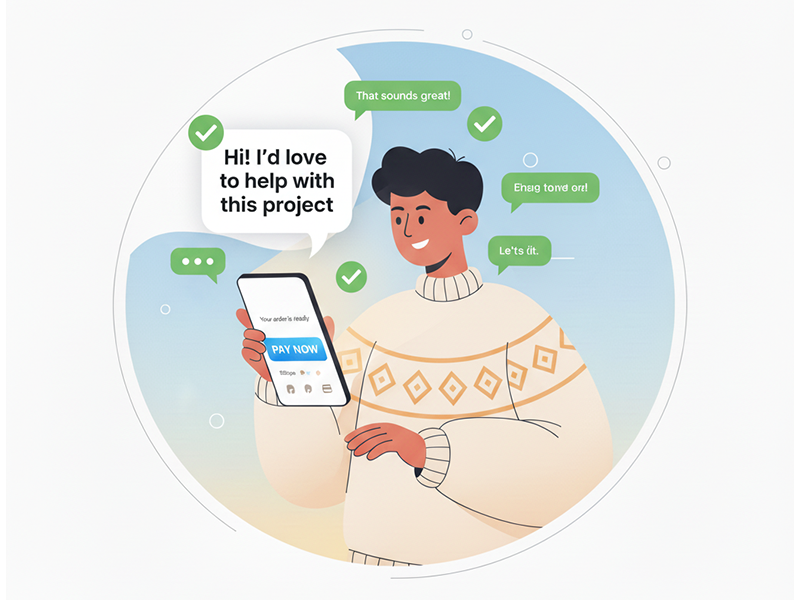
These are real stories of people who went from $0 to their first income using these five steps:
Example 1: Writer who made $1,200 in three weeks
A writer with no clients joined three Reddit communities for small business owners and r/entrepreneur. She made helpful comments for a week. When someone posted “struggling to write website copy,” she replied with advice and mentioned she takes on projects. Got two clients: one at $400 for website copy, one at $800 for blog posts. Week four she raised her rate to $600 per project.
Example 2: Designer who earned $2,400 first month
A graphic designer created five sample social media templates and posted them free in a Facebook group for coaches. Added a comment: “If you’d like custom templates for your brand, I’m taking on three clients this month. $299 for a set of 10 templates.” Eight people messaged her. She took the first three, delivered great work, asked for referrals, and got five more projects from those referrals.
Example 3: Developer who made $3,500 in four weeks
A web developer identified 20 local businesses with outdated websites. Sent personalized emails: “I noticed [specific issue with their site]. I help local businesses create modern websites that work on mobile. Would you be interested in a free 15 minute consultation?” Four replied. Two hired him at $1,500 each. One referred him to another business for $500.
Example 4: Coach who earned $1,800 week one
A business coach posted on LinkedIn: “I’m testing a new offer: 90 minute business strategy session for $300. I’ll help you identify your biggest growth obstacle and create an action plan. Only taking five clients this week. Comment ‘interested’ if you want details.” Got 12 comments. Booked six sessions. Delivered so much value that three became ongoing coaching clients at $600 monthly.
What all these examples share: they followed the five steps, they asked directly for the sale, and they did it within one month, not someday. None of them waited to feel ready. They just started.
Final thoughts: From skilled to paid in 30 days
You have skills. Now you know the exact steps to turn those skills into income this month. The only question is whether you’ll actually do it.
Most people read guides like this, feel motivated for a day, and then fall back into waiting. Waiting to feel more qualified. Waiting to build the perfect portfolio. Waiting for the right moment. Meanwhile, people with your same skills are earning money because they stopped waiting and started asking.
The difference between skilled and paid is five clear actions:
- Pick one monetizable skill
- Find where clients already are
- Create one clear offer
- Make payment easy
- Ask for the sale repeatedly
You can complete all five steps this week. Your first client could pay you by Friday. Your first $1,000 could be in your account within two weeks. Not because you’re special or lucky, but because you followed a process that works when you actually execute it.
Stop researching. Stop planning. Stop waiting for permission. Pick your skill, make your offer, find your clients, and ask them to pay you. Everything you need to know is in these five steps. The only thing missing is your decision to start today, not tomorrow.
If you need a tool that makes step four (easy payment) completely effortless, Briefee combines your offer, booking, and payment in one simple link. No website needed, no complex setup, just a single link you can share anywhere to start accepting payment immediately. Because the faster you can collect payment, the faster skills become income.
2025 © Briefee. All Rights Reserved.